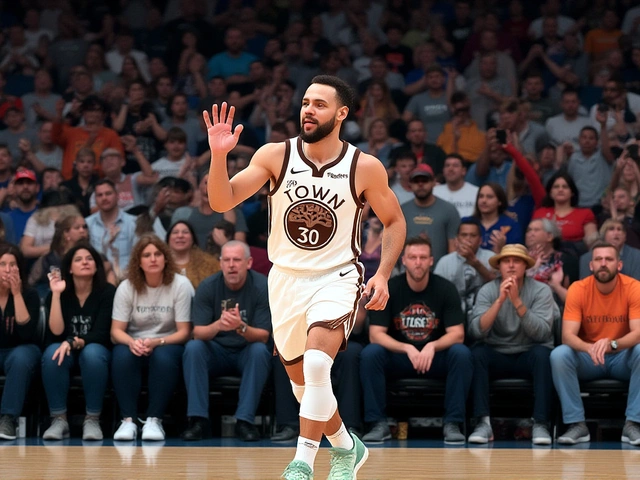
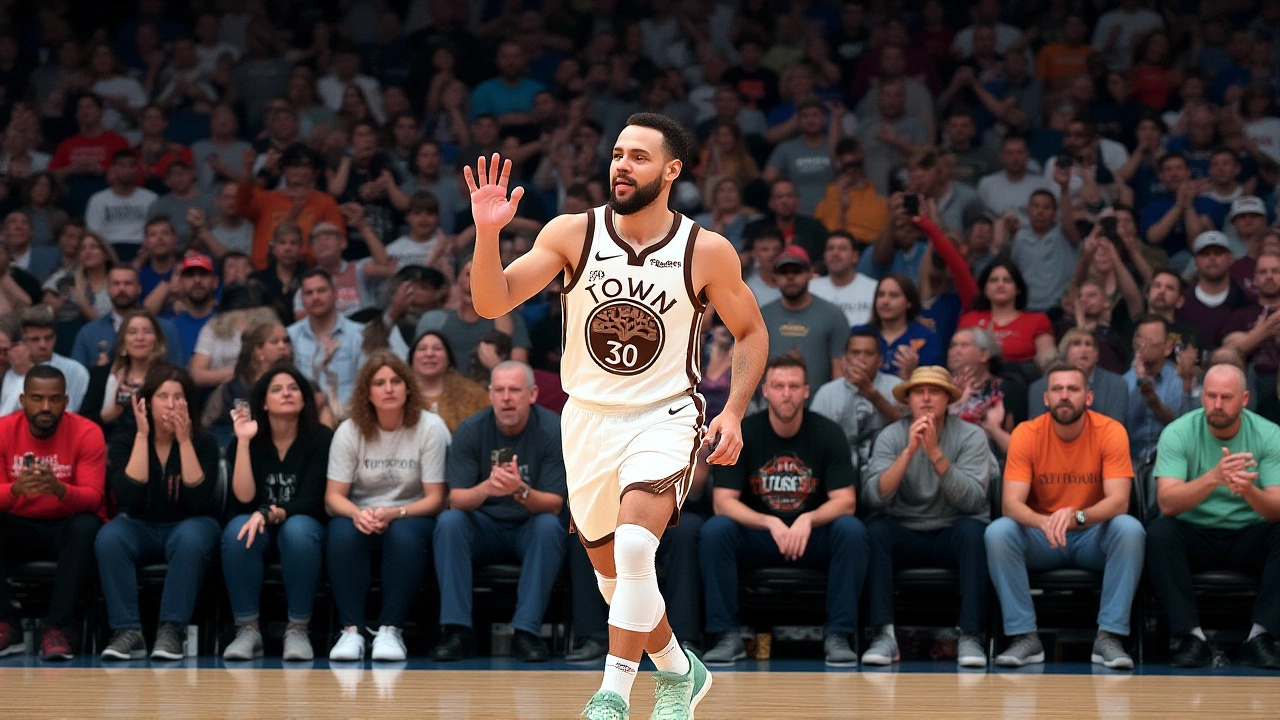
Stephen Curry erupts for 31 points as Warriors rout Jazz 134-117 at Chase Center
- Sami El-Amin
- 26 November 2025
- 0 Comments
When Stephen Curry stepped onto the court at Chase Center on Monday night, he didn’t just show up—he took over. The three-time NBA champion dropped 31 points on 12-of-24 shooting, including six three-pointers, leading the Golden State Warriors to a commanding 134-117 win over the Utah Jazz. It was his fifth 30-point game in six contests, and it came after a rare home loss just days earlier. The win wasn’t just about Curry, though. It was a statement: this team, even without Draymond Green, still has teeth.
From 11-0 Down to Dominance
The game started like a nightmare. The Warriors missed their first six shots. The Jazz, hungry after a brutal road trip, hit four of their first six and raced out to an 11-0 lead. Fans held their breath. But then Jamie Butler happened. With 8:42 left in the first quarter, he drove hard, drew a foul, and finished through contact—adding the free throw for a classic three-point play. That sparked a 17-3 run. By the time the dust settled, Golden State had flipped the script.
The second quarter was pure fire. The Warriors dropped 41 points—more than any Jazz quarter all night. Buddy Hield caught fire, hitting back-to-back threes, one assisted by Gary Payton II, who had a career-best eight assists in a rare start. The bench outscored Utah’s starters 32-18 in that quarter alone. At halftime, the Warriors led 67-55. The Jazz? They looked tired. Confused. Out of sync.
Bench Firepower and Defensive Discipline
Here’s the thing about this Warriors team: they don’t need five starters playing 35 minutes. Their depth is their weapon. The reserves combined for 52 points—Hield alone dropped 20. Moses Moody added 15, and Payton II, usually a spark plug off the pine, played like a floor general with six rebounds and eight assists. Even the little things mattered: only 10 turnovers. Seventeen forced from Utah. Fourteen points off those steals and passes. That’s not luck. That’s execution.
Meanwhile, the Jazz had no answer. Keyonte George led them with 28 points, seven assists, and six rebounds—impressive, sure—but he was the only one who looked like he belonged. Taylor Hendricks grabbed nine rebounds, but the rest of the roster struggled to find rhythm. They shot 47.5% from the field, but just 11-of-36 from deep. They turned it over too much. They let Golden State dictate pace. And when the Warriors hit their threes—especially in the fourth quarter—there was no comeback left in them.
Missing Pieces and Hope on the Horizon
Golden State was missing two key pieces. Draymond Green, the defensive anchor and emotional leader, sat out again with a sprained right foot. Coach Steve Kerr said the MRI showed no structural damage—just rest needed. "He’s not hurt, he’s just... out," Kerr said after the game. "We hope he’s back Wednesday." Green’s absence has been felt, but the Warriors are proving they can win without him. Still, his return—scheduled for Wednesday night against the Los Angeles Clippers—could be the difference between good and great.
Forward Jonathan Kuminga remains sidelined with troublesome knees, another blow to their frontcourt depth. But with Curry playing like a man possessed and the bench firing on all cylinders, they’ve found a way.
Where This Leaves Both Teams
The Warriors improved to 10-9, climbing back to .500 after their first home loss to Portland on November 21. They’re still 3.5 games behind the Western Conference leader, but momentum is shifting. They’ve won their last two after dropping three of four. The Jazz? They’re now 5-12, losers of four straight and five of six. Their road trip was brutal. They lost to the Lakers on Sunday, then flew to San Francisco and got blown out. Next up: hosting Sacramento on Friday. But with no clear identity and no consistent scoring beyond George, they’re running out of time to figure things out.
Curry’s performance wasn’t just about points. It was about control. He made the Jazz defend every inch. He found open shooters. He kept the ball moving. And when the game slipped away, he didn’t force it—he let the system work. That’s leadership.
What’s Next?
For Golden State: Wednesday night at home against the Clippers. Green’s return looms large. If he’s back, the Warriors could be a nightmare for anyone in the West. For Utah: Friday in Salt Lake City against Sacramento. They need a win. Badly. But with their defense still leaking and their bench non-existent, it’s hard to see how they turn it around.
One thing’s clear: this isn’t just a win. It’s a reminder. The Warriors are still here. And when Curry’s on, no one wants to be the team that gets in his way.
Frequently Asked Questions
How did Stephen Curry’s performance compare to his recent games?
Curry’s 31-point outing on November 24 was his fifth 30-point game in the last six contests, matching his peak scoring stretch from early 2023. He’s averaging 29.8 points over that span, shooting 43% from deep, and has recorded at least six assists in each of those six games. This consistency suggests he’s entering another elite scoring window—something he’s done before at age 35, most notably in the 2022 championship run.
Why is Buddy Hield’s bench production so important for the Warriors?
Hield’s 20-point explosion off the bench gave Golden State its second-highest scoring quarter from reserves this season. With Green and Kuminga out, the Warriors needed perimeter firepower—and Hield delivered. He’s now averaging 15.7 points per game this season, but his impact is magnified when he plays with Payton II and Curry, creating spacing and forcing defenses to stretch thin. His presence keeps opponents from collapsing on Curry.
What does Draymond Green’s absence mean for the Warriors’ defense?
Without Green, the Warriors allowed 117 points—their highest since October. He’s the only player on the roster who can guard five positions and orchestrate defensive rotations in real time. His absence led to more open threes for Utah and fewer contested drives. Even though they won, their defensive rating dropped 8.2 points per 100 possessions without him. His return could instantly upgrade their playoff readiness.
How does this loss affect the Utah Jazz’s playoff chances?
Utah’s 5-12 record puts them 11.5 games behind the Western Conference leader and 7.5 games out of the play-in spot. With only 15 games left before the All-Star break, they’re effectively out of contention. Keyonte George is emerging as a bright spot, but the team lacks depth, defensive cohesion, and consistent scoring beyond him. Unless they trade for a veteran scorer by the deadline, they’re likely looking at another lottery pick next summer.
What made the Warriors’ second quarter so dominant?
Golden State scored 41 points in the second quarter thanks to a perfect storm: Curry drew double teams, allowing Payton II and Hield to find open looks. They made 7-of-13 threes in the period, forced six Jazz turnovers, and held them to just 14 points on 36% shooting. The bench unit—Payton II, Hield, Moody, and Andre Iguodala—outscored Utah’s starters 27-10. It was the kind of quarter that turns close games into blowouts.
Is this Warriors team still a threat in the Western Conference?
Absolutely. Even without Green and Kuminga, they’ve won three of their last four games, including two against playoff-caliber teams. Curry’s form, Hield’s shooting, and Payton II’s energy make them dangerous in a short series. Their 10-9 record isn’t flashy, but their net rating is +3.1—top-10 in the West. If Green returns healthy, they’re a top-4 seed threat. And in the playoffs, Curry alone can carry them through a series.